
PHP
When I Look Back at Who I Was Back Then… It Feels Like Another Lifetime

Written By
PHP
Written By
I found an old notebook from my first week in treatment.
The handwriting was shaky. The thoughts were frantic. Every page felt like someone trying to claw their way out of a burning building.
That person wouldn’t recognize me now.
And if I’m honest? There are days I barely recognize them either.
If you completed structured treatment years ago and you’re technically “doing well” but feeling flat, restless, or spiritually off… I see you. This isn’t about relapse. It’s about evolution.
And sometimes evolution feels uncomfortable.
Within my first few days in structured daytime care, I wasn’t focused on thriving. I was focused on not self-destructing. I needed routine. I needed containment. I needed people who wouldn’t let me spiral.
Back then, survival was the win.
Now? The questions are different.
Long-term recovery has a strange middle season.
You’re not in crisis.
You’re not white-knuckling.
You’re not waking up every day afraid you’ll lose everything.
But you’re also not lit up.
And that in-between can mess with your head.
The version of you who entered a Partial Hospitalization Program was in pain. It was obvious. There was urgency. There was something to fix.
Now the discomfort is quieter.
It’s the 9pm thought that whispers, Is this all there is?
It’s the subtle envy when you see other people chasing new dreams.
It’s the numbness that isn’t depression—but isn’t joy either.
This doesn’t mean you’re ungrateful.
It doesn’t mean you’re regressing.
It means your nervous system isn’t in survival mode anymore—and your brain is still learning what to do with that space.
In the beginning, everything feels amplified.
Breakthroughs feel massive.
Triggers feel dramatic.
Support feels lifesaving.
There’s structure. There are check-ins. There’s visible growth happening almost daily.
But long-term recovery?
It’s brushing your teeth.
Paying bills.
Answering emails.
Having hard conversations calmly.
Going to bed at a reasonable hour.
It’s stability.
And stability doesn’t always feel like progress. It feels… ordinary.
But here’s the truth: ordinary is what we prayed for.
We just didn’t know it would feel this quiet.
When I stepped into that level of care, I needed guardrails.
I needed:
Now, years later, what I need is different.
I need:
And when those needs go unmet, it can feel like something’s wrong.
But it’s not wrong. It’s growth pressure.
Sometimes long-term alumni mistake growth pressure for backsliding. We panic when the feelings get uncomfortable again. We assume discomfort equals danger.
It doesn’t.
Sometimes discomfort equals expansion.
This is where we get ourselves twisted.
We think:
Slow down.
Healing doesn’t remove the human condition.
You’re still going to feel boredom.
Doubt.
Comparison.
Loneliness.
Ambition.
Grief for past years.
Fear of wasting future ones.
The difference now?
You’re not coping destructively.
That’s not small. That’s everything.
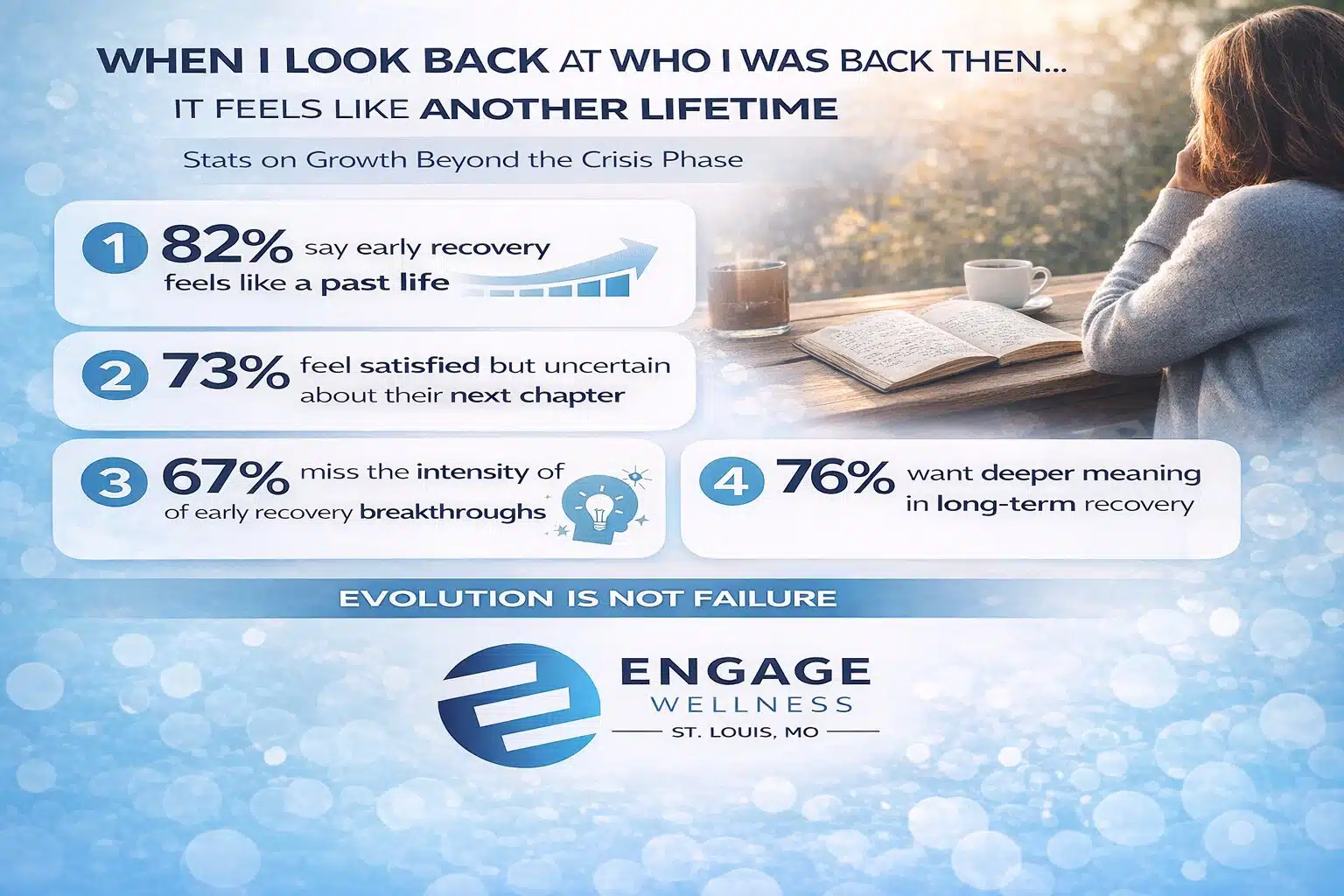
Let’s get specific.
You’re probably evolving—not unraveling—if:
Regression feels like losing control.
Evolution feels like wanting more.
There’s a big difference.
Here’s the spicy part.
Sometimes we get so focused on “not going backwards” that we stop moving forward.
We protect our stability so aggressively that we avoid risk entirely.
No new hobbies.
No career pivots.
No deeper therapy.
No spiritual exploration.
No vulnerable conversations.
We freeze growth because we’re afraid movement equals danger.
But the person who entered treatment wasn’t meant to stay in maintenance mode forever.
They were meant to grow.
And growth will always feel a little destabilizing.
This is important.
Some long-term alumni quietly wonder if they need more support again. Not because they’re spiraling—but because they feel disconnected.
And then the shame hits.
“Why would I need that again?”
“Shouldn’t I be past this?”
“What will people think?”
Let me be blunt: Getting support is not regression.
Sometimes people re-engage with structured care because they want recalibration, not rescue.
If you’re exploring whether something like a Partial Hospitalization Program could help you reset your footing, that’s not weakness.
That’s ownership.
You’re allowed to choose support before things fall apart.
That’s maturity.
The early version of you fought to stay afloat.
This version?
You get to build a life that actually feels aligned.
That might mean:
Growth at this stage is less about crisis management and more about conscious design.
It’s slower.
It’s quieter.
It’s deeper.
And it can feel lonely.
But it’s not failure.
It’s the next chapter.
Yes. After the intensity of early recovery and structured support, long-term stability can feel emotionally muted. Your nervous system isn’t constantly activated anymore. That calm can be misinterpreted as emptiness.
Flat doesn’t automatically mean depressed. It doesn’t automatically mean you’re about to relapse. It may simply mean you’re ready for deeper work.
Ask yourself:
Slipping involves secrecy and loss of control. Evolving involves awareness and discomfort. If you’re asking these questions openly, that’s usually a good sign.
Because intensity creates dopamine. Early recovery is full of breakthroughs, emotional highs, group connection, and visible change. Long-term recovery is steadier. Missing intensity doesn’t mean you miss chaos. It means your brain remembers momentum. The solution isn’t destruction—it’s healthy challenge.
Possibly. Support isn’t only for emergencies.
If you’re feeling disconnected, emotionally overwhelmed, or unsure of your footing, structured support can provide clarity and recalibration. It’s proactive—not reactive. There’s strength in addressing things before they escalate.
That shame is common. We tell ourselves that once we “graduate,” we should never need help again. But recovery isn’t linear, and growth doesn’t stop at discharge. Shame thrives in silence. Support dissolves it.
Start with honesty. Say out loud—if only to yourself—“I feel disconnected.”
Then ask:
You don’t have to overhaul your life overnight.
But you do have to stop pretending you’re fine if you’re not.
The version of you who walked into treatment needed safety.
The version of you reading this deserves meaning.
If you’re feeling disconnected but don’t want to undo the progress you’ve made, you don’t have to navigate that alone. Call (314) 350-4135 or visit our Partial Hospitalization Program services to learn more about our Partial Hospitalization Program services in St. Louis, Missouri.




© 2025 Engage Wellness Acton, MO. All Rights Reserved | SEO by DIGITECH | Sitemap | Privacy Policy
© 2025 Engage Wellness Acton, MO. All Rights Reserved | SEO by DIGITECH | Sitemap | Privacy Policy